Table of Contents
ToggleA movie breakdowns guide helps viewers understand films on a deeper level. Whether someone watches casually or studies cinema seriously, knowing how to analyze movies transforms the viewing experience. This guide covers the essential elements of film analysis, from story structure to visual style. Readers will learn practical techniques to write their own movie breakdowns and discover useful tools for the process. By the end, anyone can approach films with a sharper, more critical eye.
Key Takeaways
- A movie breakdowns guide helps viewers analyze films by examining story structure, cinematography, sound design, and thematic elements.
- Watch a film at least twice—once for the experience and once for detailed note-taking and analysis.
- Focus your movie breakdown on one or two specific elements rather than trying to cover everything at once.
- Visual choices like camera angles, lighting, and color palettes communicate emotion and reinforce a film’s themes.
- Use resources like screenplays, video essay channels, and film theory books to deepen your analytical skills.
- Practice regularly with films in genres you know well to sharpen your ability to spot conventions and creative choices.
What Is a Movie Breakdown?
A movie breakdown is a detailed analysis of a film’s components. It examines how a movie tells its story, creates emotion, and delivers meaning through various techniques. Think of it as reverse-engineering a finished product to understand how all the pieces fit together.
Film students, critics, screenwriters, and enthusiastic fans all use movie breakdowns. A screenwriter might study how a thriller builds tension. A cinematographer could analyze lighting choices in a noir film. Even casual viewers benefit from understanding why certain scenes resonate emotionally.
Movie breakdowns typically cover several areas:
- Plot and story structure – How events unfold and connect
- Character development – How characters change and grow
- Visual elements – Camera work, lighting, color choices
- Sound design – Music, dialogue, ambient sounds
- Themes and symbols – Deeper meanings and recurring motifs
The goal isn’t to “solve” a movie. Instead, a good movie breakdown reveals the craft behind the final product. It shows why a director made specific choices and how those choices affect the audience.
Some breakdowns focus on a single element. Others provide comprehensive scene-by-scene analysis. The approach depends on the purpose. A film school assignment might require academic rigor, while a YouTube video essay can take a more conversational tone.
Key Elements to Analyze in Any Film
Every movie breakdown should examine certain core elements. These building blocks appear in all films, regardless of genre or budget. Understanding them provides a framework for any analysis.
Story Structure and Narrative
Story structure forms the backbone of every film. Most Hollywood movies follow a three-act structure: setup, confrontation, and resolution. But, many films experiment with this formula.
When analyzing narrative, consider these questions:
- Where does the inciting incident occur?
- How does the midpoint shift the story’s direction?
- What obstacles does the protagonist face?
- Does the ending resolve all major plot threads?
Nonlinear storytelling adds another layer. Films like Pulp Fiction or Memento rearrange chronological events for dramatic effect. A movie breakdown should note how this affects audience understanding and emotional response.
Pay attention to pacing too. Some films move quickly with rapid cuts and short scenes. Others linger on moments, letting tension build slowly. Both approaches work, but they create vastly different viewing experiences.
Cinematography and Visual Style
Cinematography refers to how a film captures images. This includes camera angles, movement, framing, lighting, and color. Every visual choice communicates something to the audience.
Camera angles shape perception. A low angle makes a character appear powerful. A high angle suggests vulnerability. Dutch angles (tilted camera) create unease or disorientation.
Lighting sets mood instantly. High-key lighting feels bright and optimistic. Low-key lighting with strong shadows creates mystery or danger. Color palettes also communicate emotion, warm tones suggest comfort while cool blues often indicate sadness or isolation.
A thorough movie breakdown notes these visual patterns. Does the director use long takes or quick cuts? Are there recurring visual motifs? How does the cinematography support the story’s themes?
Consider The Grand Budapest Hotel as an example. Wes Anderson uses symmetrical framing, pastel colors, and precise camera movements. These choices establish the film’s whimsical, storybook quality. The visual style isn’t just pretty, it reinforces the narrative tone.
How to Write Your Own Movie Breakdown
Writing a movie breakdown becomes easier with a clear process. Here’s a practical approach anyone can follow.
Step 1: Watch the film at least twice. The first viewing lets the story wash over naturally. The second viewing allows for note-taking and closer observation. Pause frequently during the analytical watch.
Step 2: Choose a focus. Trying to analyze everything at once leads to scattered results. Pick one or two elements. Maybe examine how the film uses sound design. Or focus specifically on character arcs. A focused movie breakdown produces stronger insights than a surface-level overview.
Step 3: Take structured notes. Create categories before watching. Note timestamps for important scenes. Write down specific observations, not vague impressions. “The lighting shifts from warm to cold when the character learns the truth” beats “the lighting was interesting.”
Step 4: Research context. Knowing when and why a film was made adds depth. Was it responding to a cultural moment? Did the director face production challenges? Context often explains creative choices.
Step 5: Organize your analysis. Start with a clear thesis or main observation. Support it with specific examples from the film. Connect individual observations to larger themes. End with insights about what the film achieves and how.
Step 6: Revise for clarity. Remove vague statements. Ensure each paragraph advances the argument. A strong movie breakdown reads smoothly and teaches the reader something specific.
Practice improves movie breakdown skills. Start with films in favorite genres. Familiarity with conventions makes it easier to spot when filmmakers follow or subvert expectations.
Tools and Resources for Film Analysis
Several tools make movie breakdowns more effective and efficient.
Screenplays: Reading the script alongside the film reveals changes made during production. Sites like The Internet Movie Script Database and Script Slug offer free access to many screenplays.
Video essay channels: YouTube hosts excellent film analysis content. Channels like Every Frame a Painting, Lessons from the Screenplay, and Now You See It demonstrate professional-level movie breakdowns. Watching these teaches technique while exploring specific films.
Books on film theory: David Bordwell’s Film Art: An Introduction provides foundational knowledge. Sidney Lumet’s Making Movies offers a director’s perspective. These resources deepen understanding of cinematic language.
Note-taking apps: Tools like Notion, Evernote, or even simple spreadsheets help organize observations. Create templates for consistent analysis across multiple films.
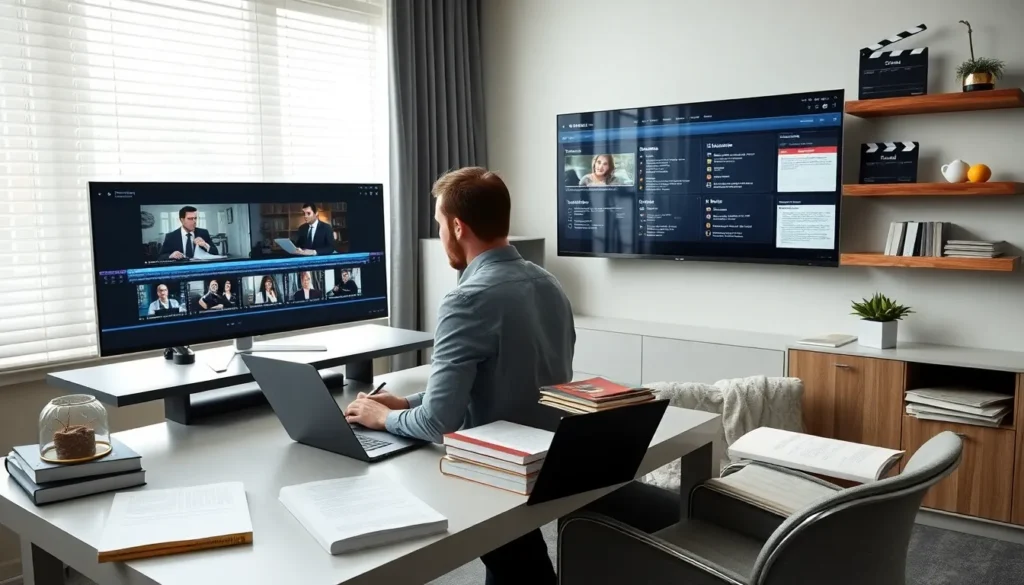
Frame-by-frame viewing: VLC and other media players allow slow-motion and frame-by-frame playback. This feature proves invaluable for studying quick cuts or subtle visual details.
Film databases: IMDb, Letterboxd, and the Criterion Channel provide background information, reviews, and curated collections. They also connect analysts to communities of fellow film enthusiasts.
Combining these resources with regular practice transforms anyone into a skilled film analyst. The best movie breakdowns blend technical knowledge with genuine passion for cinema.